

795 nm Single-Mode VCSELs: Driving Chip-Scale Precision in Rubidium Atomic Clocks and Quantum Magnetometers
Discover how 795 nm single-mode VCSELs are used in rubidium atomic clocks and quantum magnetometers. This article explores the rubidium D1 transition, spectral purity, polarization stability, microwave modulation, and packaging options for compact atomic sensing systems.

Unlocking Femtotesla Precision: The Critical Role of Non-Magnetic VCSELs in OPM and SERF Sensors
Wearable quantum magnetometers (OPM and SERF) are revolutionizing brain imaging by ditching bulky cryogenics for scalp-mounted sensors. Achieving true femtotesla sensitivity hinges on a critical optical breakthrough: eliminating ferromagnetic packaging artifacts. Explore how Semiatom GmbH’s narrow-linewidth, non-magnetic VCSELs safeguard atomic spin coherence to power next-generation bio-magnetic sensing.
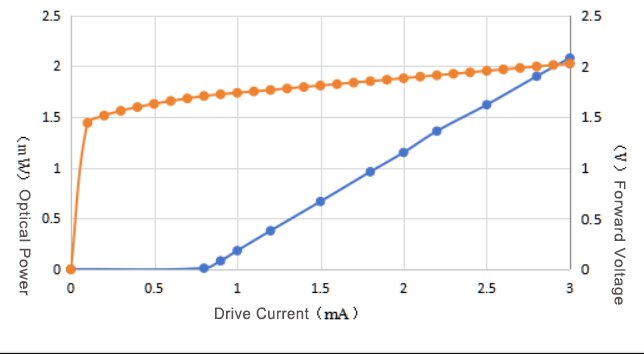
Understanding VCSEL L-I-V Curves: Threshold Current and Optical Power
Learn how to read a VCSEL L-I-V curve and understand the relationship between threshold current, optical power, and forward voltage. This article explains slope efficiency, thermal behavior, and practical measurement techniques, with real curve-based examples to help engineers evaluate VCSEL performance and select suitable operating conditions.

VCSEL Polarization Stability: Why Switching Matters in Atomic Sensors
Polarization switching can affect atomic sensor performance even when laser output power remains stable. This article explains how injection current, temperature, and optical feedback influence VCSEL polarization stability. It also covers optical pumping, polarization extinction ratio, and practical considerations when selecting VCSELs for rubidium and cesium atomic sensors.

760 nm VCSEL for Oxygen Sensing: Wavelength Tuning and Absorption Spectroscopy
Learn how a 760 nm VCSEL measures oxygen through absorption spectroscopy. This article covers oxygen A-band absorption, wavelength tuning, laser selection, and key factors affecting sensor performance. Discover VCSEL solutions and customization options from Semiatom GmbH.
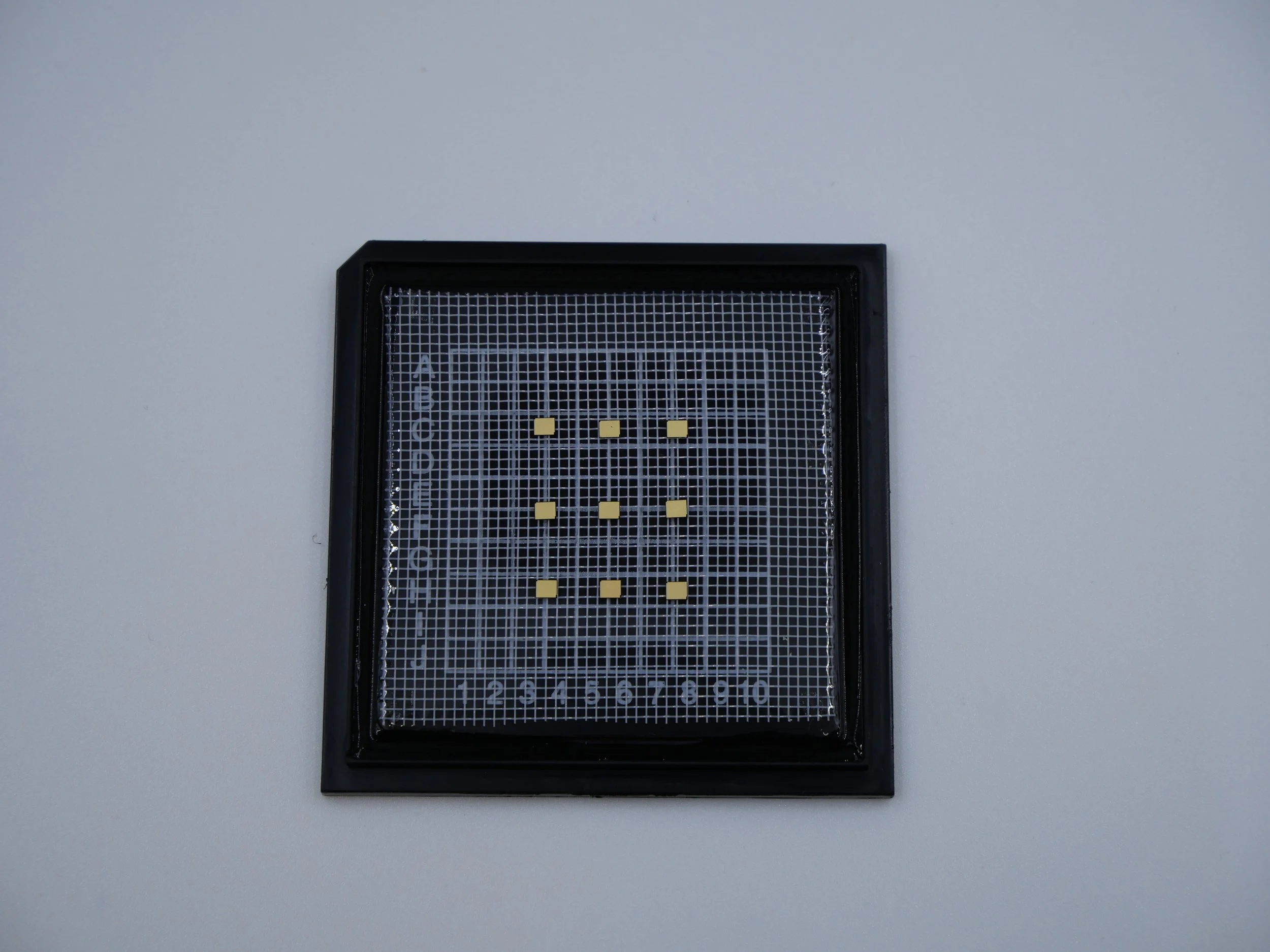
ESD Protection for Bare VCSEL Die: Handling and Storage Guidelines
Bare VCSEL die require careful handling to prevent electrostatic discharge, surface contamination, and mechanical damage. This guide covers practical VCSEL ESD protection, safe handling techniques, suitable packaging, and storage requirements to help manufacturers protect sensitive chips throughout assembly.

VCSEL Die vs Packaged VCSEL: Which Is Better for OEM Integration?
Choosing between bare VCSEL die and packaged VCSELs affects optical integration, thermal management, assembly, and manufacturing costs. This article explains the practical differences between the two formats, including their advantages for compact optical systems, atomic sensors, and OEM applications. Learn how to select the right VCSEL configuration for your equipment.
Single-Mode VCSELs for Atomic and Quantum Sensing
Explore how single-mode VCSELs support atomic and quantum sensing applications, including rubidium and cesium vapor cells, optical pumping, wavelength tuning, polarization, packaging, and key parameters to consider when selecting a VCSEL.

895nm Single-Mode High Power Laser Diodes for Cesium D1 Line Applications
Cesium D1 line applications need more than a laser source near 895nm. They require stable single-mode output, reliable packaging, and a design that fits compact atomic modules without disturbing sensitive environments. This article explains why 895nm VCSELs are used in cesium atomic clocks, frequency references, vapor-cell modules, and quantum sensing systems. It also covers why package material, window structure, thermal behavior, and non-magnetic packaging should be considered early in the design process.

VCSEL Non-Magnetic Package Trends for Quantum Sensing, MRI, and Precision Optics
VCSEL non-magnetic packaging is becoming increasingly important in quantum sensing, MRI-related optics, atomic modules, and other precision optical systems. When a VCSEL is placed close to a vapor cell, magnetic shield, or compact sensing head, the package material can affect system stability. This article explains why 795nm and 895nm VCSELs often require careful package selection, how non-magnetic packaging helps reduce unwanted disturbance, and what engineers should consider before choosing a VCSEL package for sensitive optical applications.
How to Choose the Right High-Power VCSEL for Your Application
Choosing the right high-power VCSEL is not only about wavelength. Output power, package type, integration method, and application environment all affect long-term performance. This guide explains how to select a suitable VCSEL for magnetometers, quantum sensing, and precision photonics systems, covering 795 nm and 895 nm options, power range, bare die, TO-46, customized, and non-magnetic packaging.