
895nm Single-Mode High Power Laser Diodes for Cesium D1 Line Applications
Cesium D1 line applications need more than a laser that is “close to 895nm.” They need a light source that can stay stable, fit into a compact module, and work near sensitive atomic parts without adding unwanted disturbance.
That is why 895nm single-mode high power laser diodes and VCSELs are widely considered for cesium atomic clocks, frequency references, vapor-cell modules, and quantum sensing devices.
For these systems, the laser is not a separate accessory. It affects wavelength control, optical alignment, thermal behavior, package layout, and long-term device performance.
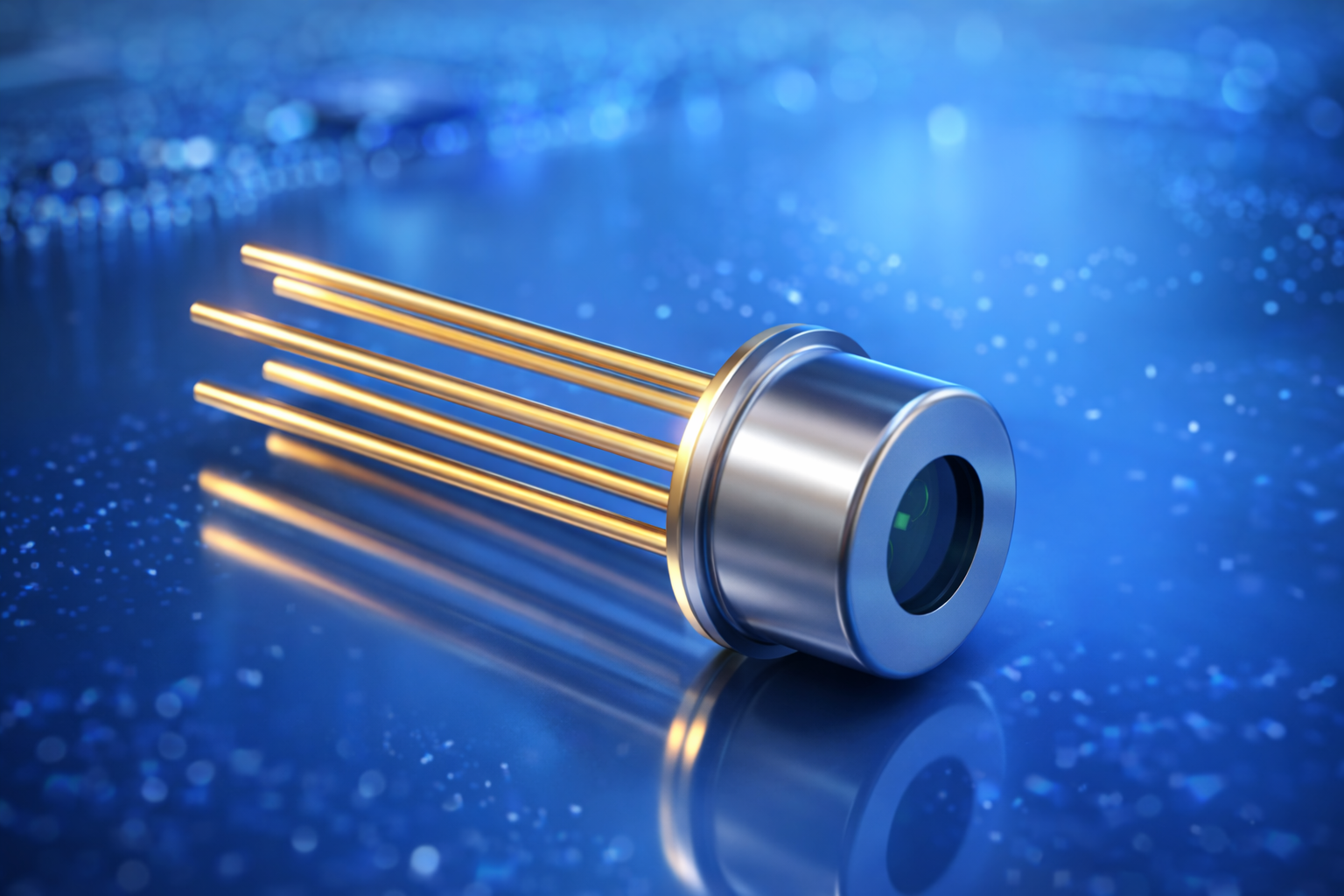
Semiatom GmbH manufactures VCSELs and provides customized product lines for customer projects. For atomic and quantum applications, we can customize 795nm / 895nm 1mW VCSEL packaging, including magnetic packages, non-magnetic packages, and different window structures.
895nm Single-Mode High Power for Cesium D1 Line Applications
The cesium D1 transition is linked to light around 895nm. In real devices, that wavelength has to be controlled carefully.
A cesium module may include a laser source, vapor cell, heater, optical window, current driver, shielding, and control electronics. These parts sit close together, especially in compact systems. If the laser drifts or the package is not suitable, the full device becomes harder to tune.
A well-matched 895nm source gives engineers more margin during assembly and operation.
Why the cesium D1 line needs a stable 895nm source
Atomic systems are sensitive. That is what makes them useful.
In cesium D1 line work, the optical source must interact with the atoms in a predictable way. If the wavelength shifts too much, the system may need extra correction. If the emission is not clean, tuning becomes slower.
Single-mode behavior helps keep the optical signal more controlled. Stable output helps the module work with fewer surprises.
895nm single-mode high power in compact atomic modules
Compact atomic modules often have short optical paths. The laser may sit close to the vapor cell, window, or micro-optics.
In these layouts, 895nm single-mode high power gives useful optical margin. Some light is lost through windows, filters, coupling optics, and alignment tolerance. Higher usable output helps compensate for those losses without making the module larger.
This is especially useful for OEM systems where size, repeatability, and integration work all matter.
Where 895nm Laser Diodes and VCSELs Are Used
895nm laser sources are used in several cesium-based systems. The hardware may vary, but the basic needs are similar: stable wavelength, clean emission, practical packaging, and good fit with the vapor-cell structure.
Cesium atomic clocks
In a cesium atomic clock, the laser source is part of the timing system. Its behavior affects how the device interacts with the cesium vapor cell.
A stable 895nm source helps engineers reduce tuning effort. It also helps improve repeatability when moving from prototype to production.
Frequency reference modules
Frequency reference modules need consistent optical behavior. A source with poor spectral control can create extra work for the electronics and temperature control system.
A single-mode 895nm laser source can help keep the optical path cleaner and easier to manage.
Quantum sensing devices
Quantum sensors can detect very small physical changes. This sensitivity is useful, but it also means nearby materials matter.
If the laser package contains magnetic materials and is placed close to the vapor cell or sensing area, it may affect the local magnetic environment. For this reason, non-magnetic packaging is often preferred in quantum sensing modules.
Why Single-Mode Performance Matters
Single-mode performance is not just a technical label. It affects how easy the laser is to use in an atomic system.
A source with cleaner emission can reduce unwanted optical behavior. It can also make the system easier to tune and repeat.
Cleaner emission for atomic interaction
Atomic systems work best when the light source is controlled. Extra modes can act like optical noise. They may not always destroy performance, but they can make the module harder to optimize.
Single-mode output helps keep the light closer to the intended working condition.
Less tuning work for engineers
A clean source saves time. Engineers do not want to fight the laser while trying to tune the vapor cell, heater, driver, and optics.
When the laser behaves predictably, the rest of the module is easier to build.
Packaging Is Part of Laser Performance
The package is often treated as a mechanical detail. In cesium and quantum systems, that view is too simple.
The package affects:
A good chip in the wrong package can still cause trouble. A package matched to the final device can reduce integration work.
Magnetic packaging for standard optical systems
Magnetic packaging can be suitable for general optical modules where the laser is not near a sensitive atomic region.
It may be a practical choice for lab setups, less sensitive optical systems, or modules where magnetic influence is not a main concern.
Non-magnetic packaging for quantum sensing
Non-magnetic packaging is important when the laser package sits close to the vapor cell, inside magnetic shielding, or near the sensing region.
Quantum sensing systems often need a clean magnetic environment. Even small unwanted magnetic influence may affect the local field condition.
Non-magnetic VCSEL packaging helps reduce one possible source of disturbance.
Why package material matters near a vapor cell
In compact systems, the distance between the laser and the vapor cell can be very short. The package is no longer far away from the atomic region. It becomes part of the local environment.
That is why package material, window structure, and current path should be considered early in the project.
Customized 795nm / 895nm 1mW VCSEL Packaging from Semiatom GmbH
Semiatom GmbH provides customized VCSEL options for customers working on atomic clocks, quantum sensors, vapor-cell modules, and related optical systems.
We can customize 795nm / 895nm 1mW VCSEL non-magnetic packaging according to customer requirements. We can also provide magnetic package choices when the application allows it.
795nm is often used in rubidium-related systems. 895nm is commonly selected for cesium D1 line applications.
795nm and 895nm VCSEL options
Different atomic systems need different wavelengths. A customer working with rubidium may require 795nm. A customer working with cesium D1 line applications may require 895nm.
Semiatom GmbH can provide customized VCSEL product lines for both wavelength needs.
Custom magnetic and non-magnetic packages
Some customers need standard magnetic packages. Others need non-magnetic packages for quantum sensing or atomic modules.
Semiatom GmbH can customize package materials according to the customer’s device structure. This helps the VCSEL fit the actual system layout instead of forcing the customer to redesign around a standard package.
Custom windows for different optical paths
The window is a small part, but it can affect the full optical path.
Customers may need different window materials, coatings, thicknesses, or positions. Some modules need a window that works with a short beam path. Others need a specific height to match the vapor cell or lens.
Semiatom GmbH can customize windows according to customer needs.
How to Choose the Right 895nm Laser Package
Choosing the right 895nm laser source should not stop at wavelength and output power. The package must also match the final module.
Before choosing a package, engineers should look at the full optical and mechanical layout.
Questions engineers should ask
When non-magnetic packaging is the better choice
Non-magnetic packaging is usually the better choice when:
It is better to decide this early. Changing package material later may require changes to the module structure, optical path, and assembly process.
Why Work with Semiatom GmbH
Semiatom GmbH is a VCSEL manufacturer with customizable product lines for customer-specific applications.
For cesium D1 line systems, customers may need an 895nm source with a package that fits a tight optical layout. For rubidium systems, 795nm VCSEL options may be required. For quantum sensing, non-magnetic packaging may be critical.
We can customize:
For projects involving 895nm single-mode high power sources, packaging should be selected together with the laser performance requirements. This helps the final module stay compact, stable, and easier to assemble.
Final Note
Cesium D1 line applications need a stable 895nm optical source, but the laser chip is only one part of the system.
Single-mode behavior, usable output power, package material, window structure, and thermal behavior all affect the final device. In quantum sensing, non-magnetic packaging is especially important because the laser package may sit close to sensitive atomic regions.
Semiatom GmbH provides customized 795nm / 895nm 1mW VCSEL packaging, including magnetic and non-magnetic options, as well as custom windows. For engineers building atomic clocks, quantum sensors, and compact vapor-cell modules, the right package can make integration cleaner and more reliable.
FAQs
1. Why is 895nm used for cesium D1 line applications?
895nm is used because it matches the wavelength region needed for cesium D1 line interaction in vapor-cell systems, atomic clocks, and related modules.
2. What does single-mode mean in a VCSEL or laser diode?
Single-mode means the laser mainly emits in one optical mode. This helps provide cleaner light for atomic applications.
3. Why does high power matter if the module only needs low optical power?
Some light is lost through windows, filters, coupling optics, and alignment tolerance. Higher usable output gives engineers more margin.
4. Why is non-magnetic packaging important in quantum sensing?
Quantum sensing systems can be affected by nearby magnetic materials. Non-magnetic packaging helps reduce unwanted magnetic influence near the vapor cell or sensing area.
5. Can Semiatom GmbH customize both the package and the window?
Yes. Semiatom GmbH can customize magnetic or non-magnetic packages and windows for 795nm and 895nm VCSEL applications.