
VCSEL Non-Magnetic Package Trends for Quantum Sensing, MRI, and Precision Optics
In quantum sensing and precision optics, a VCSEL is no longer just a small laser sitting on a board.
It may sit close to an atomic vapor cell. It may work near a magnetic shield. It may be used in MRI-related optical systems, atomic sensing heads, or compact precision modules where tiny disturbances can affect the whole device.
That is why packaging has become part of the conversation.
For many standard optical systems, a regular package is enough. But when the VCSEL is placed near a sensitive magnetic area, the material around the chip starts to matter. A magnetic cap, plating layer, pin structure, or nearby current path may create unwanted influence.
Semiatom GmbH manufactures VCSELs for a wide range of optical applications, including 795nm and 895nm devices. Magnetic and non-magnetic packaging, as well as suitable optical windows, can be provided according to customer needs.
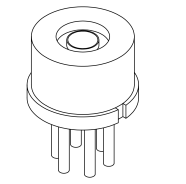
Why a VCSEL non-magnetic package matters in quantum sensing
Quantum sensing often works with extremely weak signals. The cleaner the environment around the sensing area, the easier it is to keep the system stable.
A VCSEL non-magnetic package helps reduce unwanted magnetic influence near the active area. This becomes useful when the laser is close to a vapor cell, shielded sensor head, or compact atomic module.
The idea is simple: the VCSEL should provide light, not disturb the field being measured.
How a VCSEL non-magnetic package helps keep the sensor clean
A sensor does not care where disturbance comes from. If the local field changes, the sensor may read it.
That is the risk.
When a laser package sits too close to the sensing area, even small magnetic behavior can become part of the device behavior. In a lab setup, engineers may still have room to adjust. In a compact product, there is usually less space and less patience for hidden trouble.
A VCSEL non-magnetic package gives engineers a cleaner starting point.
795nm and 895nm VCSELs in atomic systems
The wavelengths 795nm and 895nm are often linked to rubidium and cesium systems.
Rubidium-based quantum sensing commonly uses 795nm VCSELs. Cesium-based atomic devices often use around 895nm. These wavelengths are used because they match the optical needs of the atoms inside the sensing system.
The package should not work against that precision.
If the laser is stable but the package adds magnetic influence, reflection, or thermal drift, the whole module may become harder to tune.
MRI and precision optics are raising package standards
MRI-related environments are strict about magnetic materials. Even when the VCSEL is not placed directly inside the strongest field area, nearby optical parts still need careful selection.
Precision optics brings similar pressure.
Engineers want stable output, clean beam paths, low reflection, predictable heat behavior, and fewer hidden sources of drift. The package is part of that.
A good VCSEL package should do three things quietly:
In these systems, the best package is often the one nobody has to think about after installation.
Where VCSEL package trends are moving
The trend is clear: customers are no longer asking only for wavelength and output power.
They also care about the environment around the chip.
As quantum sensing modules become smaller, the VCSEL moves closer to the vapor cell, detector, lens, shield, or fiber path. That smaller distance makes packaging more important.
For ordinary optical products, standard packages may still be the right choice. For field-sensitive systems, a non-magnetic route can reduce risk from the beginning.
Key questions before choosing a package
A practical note from Semiatom GmbH
For customers building quantum sensing, MRI-related optics, atomic modules, or precision optical systems, the VCSEL package should be selected with the full device in mind.
Semiatom GmbH provides 795nm and 895nm VCSELs for rubidium and cesium-related applications, with magnetic or non-magnetic packaging and suitable optical windows available according to customer requirements.
The right package does not need to be complicated. It just needs to match the system.
FAQs
What is a VCSEL non-magnetic package?
It is a VCSEL package made with material choices that reduce unwanted magnetic influence near sensitive optical or atomic systems.
Why is non-magnetic packaging important in quantum sensing?
Quantum sensors can react to very small magnetic changes. A magnetic package near the sensing area may disturb the local field.
Which wavelengths are common for rubidium and cesium systems?
Rubidium systems often use 795nm VCSELs. Cesium systems often use around 895nm VCSELs.
Do all VCSELs need non-magnetic packaging?
No. Many optical systems can use standard packages. Non-magnetic packaging is mainly useful when the VCSEL is close to a field-sensitive area.
Can Semiatom GmbH provide magnetic and non-magnetic package options?
Yes. Semiatom GmbH can provide 795nm and 895nm VCSELs with magnetic or non-magnetic packaging according to customer needs.