
The Role of CSAC Atomic Clocks in Modern Satellite Technology
The world of satellite technology is nothing short of fascinating. From GPS navigation to global communications, the satellites orbiting above us are the silent workhorses of our modern world. But have you ever wondered what keeps these satellites ticking in perfect harmony? Enter the CSAC atomic clock—a marvel of precision that ensures these satellites stay in sync, reliable, and ready to serve us in ways we often take for granted. In this article, we’ll delve into the role of CSAC atomic clocks in modern satellite technology and why they’re indispensable in today’s interconnected world.
Understanding CSAC Atomic Clocks
What Is a CSAC Atomic Clock?
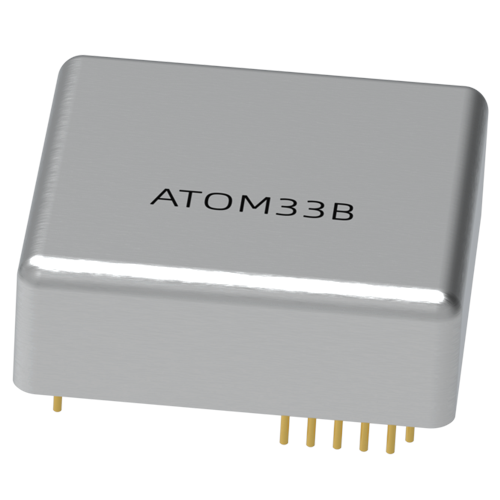
A CSAC, or Chip-Scale Atomic Clock, is a miniature atomic clock designed to deliver extreme precision in a compact form. Unlike traditional atomic clocks, which are large and power-hungry, CSACs are small enough to fit into a handheld device while maintaining the accuracy needed for demanding applications like satellite technology. The CSAC achieves this through advanced laser and microwave technology, enabling it to accurately measure time.
How Does a CSAC Atomic Clock Work?
The inner workings of a CSAC atomic clock are as intricate as they are fascinating. At its core, the CSAC uses the natural resonance frequencies of atoms—usually cesium or rubidium—to keep time. A laser excites the atoms, and their natural vibrations are counted to keep time with extreme precision. This process is highly energy-efficient, making the CSAC ideal for use in satellites, where size, weight, and power consumption are critical factors.
The Significance of Precision in Satellite Technology
Why Accurate Timing Matters
In satellite technology, timing is everything—literally. The slightest discrepancy in timing can lead to errors in data transmission, positioning, and communication. This is where the CSAC atomic clock shines. Its unparalleled accuracy ensures that satellites remain synchronized, providing consistent and reliable data, whether it’s for GPS navigation, weather forecasting, or military operations. Without accurate timing, the integrity of the entire satellite network could be compromised.
Synchronization of Satellite Networks
Satellite networks rely on precise timing to communicate with each other and with ground stations. A single misstep can result in data loss or transmission delays, affecting everything from mobile communications to satellite TV. The CSAC atomic clock plays a vital role in maintaining this synchronization, ensuring that every satellite is in perfect sync with its counterparts, no matter where it is in orbit.
Impact on Data Integrity
Data integrity is another critical aspect of satellite operations. Whether it’s transmitting high-resolution images from space or relaying secure communications, the data must remain intact from end to end. CSAC atomic clocks help preserve data integrity by providing the exact timestamps needed for error-free transmission. This is particularly important in applications like climate monitoring and disaster management, where even the smallest error can have significant consequences.
Key Applications of CSAC Atomic Clocks in Satellites
Enhancing GPS Accuracy
GPS systems are perhaps the most well-known application of satellite technology, and they depend heavily on accurate timing. The CSAC atomic clock’s precision enables GPS satellites to deliver pinpoint accuracy, which is essential for everything from navigation systems in your car to location services on your smartphone. Without CSAC atomic clocks, the GPS we rely on every day would be far less accurate, leading to errors that could impact safety, efficiency, and convenience.
Enabling Secure Communications
Secure communications are vital in today’s world, especially for military and government operations. CSAC atomic clocks provide the precise timing needed to encrypt and decrypt signals, ensuring that communications are not only accurate but also secure. By maintaining perfect synchronization between satellites, the CSAC atomic clock helps prevent unauthorized access to sensitive information, making it a critical component in modern defense systems.
Supporting Space Exploration Missions
Space exploration presents unique challenges, particularly when it comes to timing. Whether it’s a rover landing on Mars or a probe exploring the outer planets, every second counts. The CSAC atomic clock’s high precision and reliability make it an ideal tool for space missions, where traditional timekeeping methods might fall short. By providing exact timing, CSAC atomic clocks help ensure the success of complex maneuvers and data collection in the harsh environment of space.
The Technical Advantages of CSAC Atomic Clocks
Compact Design and Low Power Consumption
One of the standout features of CSAC atomic clocks is their compact design. Unlike traditional atomic clocks, which are often bulky and power-hungry, CSACs are small, lightweight, and energy-efficient. This makes them ideal for use in satellites, where space is at a premium and power resources are limited. The low power consumption of CSAC atomic clocks also means they can operate for extended periods without needing maintenance or replacement, which is crucial for long-term satellite missions.
High Stability and Longevity
Stability is key in any timekeeping device, and CSAC atomic clocks are no exception. Their high stability ensures that they maintain accurate time over long periods, which is essential for satellite operations that may last for years or even decades. Additionally, the longevity of CSAC atomic clocks means they require less frequent recalibration or replacement, reducing the overall cost and complexity of satellite missions. With a CSAC atomic clock, you can set it and forget it, confident that it will perform reliably over time.
Real-World Examples of CSAC Atomic Clocks in Satellites
Semiatom Photonics Co., Ltd.: Leading the Charge
As a leading manufacturer of CSAC atomic clocks, Semiatom Photonics Co., Ltd. is at the forefront of innovation in satellite technology. Our CSAC atomic clocks are used in a wide range of satellite applications, from GPS systems to space exploration missions. With a commitment to precision and reliability, we are proud to offer products that help power the world’s most advanced satellite networks. Our expertise in CSAC technology ensures that our customers receive the highest quality and performance, tailored to their specific needs.
Innovations in Satellite Technology
The integration of CSAC atomic clocks into modern satellite systems has opened the door to new possibilities. From improving the accuracy of earth observation satellites to enhancing the capabilities of communication satellites, CSAC technology is driving innovation across the industry. As satellites become more advanced, the demand for reliable, precise timekeeping solutions like CSAC atomic clocks will only continue to grow.
The Future of CSAC Atomic Clocks in Satellite Technology
Emerging Technologies and CSAC Integration
The future of satellite technology is bright, and CSAC atomic clocks are poised to play an even more significant role. Emerging technologies like quantum communication, autonomous spacecraft, and deep space exploration will require ever-greater precision, and CSAC clocks are well-positioned to meet these demands. As these technologies evolve, the integration of CSAC atomic clocks will be crucial in ensuring their success and reliability.
Next-Generation Satellites and CSAC Clocks
Next-generation satellites will push the boundaries of what’s possible, and CSAC atomic clocks will be at the heart of these advancements. Whether it’s enhancing the accuracy of climate monitoring satellites or enabling real-time communication with distant space probes, the future of satellite technology will depend on the precision and reliability that only CSAC atomic clocks can provide. As we look to the future, it’s clear that CSAC technology will continue to be a cornerstone of satellite innovation.
Embracing Precision: The Path Forward with CSAC Atomic Clocks
In a world that relies more heavily on satellites than ever before, the importance of precision timing cannot be overstated. CSAC atomic clocks provide the accuracy, stability, and reliability needed to ensure that our satellites—and the services they support—function seamlessly. As technology continues to evolve, Semiatom Photonics Co., Ltd. remains committed to advancing CSAC technology, helping to drive the future of satellite technology and beyond.